Solar LED garden lights let you brighten walkways, patios, and flower beds without extra electricity bills. Moreover, they charge during the day and run at night, which makes them eco-friendly and low-maintenance. If you search IndiaMART, you’ll find dozens of suppliers and models — therefore, choosing wisely matters. Below, I breakdown everything you need to know so that you buy the right lights and avoid common mistakes.

Quick Snapshot — What You’ll Learn
-
Types of solar garden lights and how they differ
-
Key specs to check on IndiaMART listings
-
Realistic price ranges and where to save
-
Easy DIY installation and maintenance tips
-
Frequently asked questions and buying checklist
1) Types of Solar LED Garden Lights (useful when browsing IndiaMART)
When you shop on IndiaMART, sellers usually list lights by form and function. Here’s a quick breakdown so you can filter fast:
🌱 1) Spike / Lawn Lights
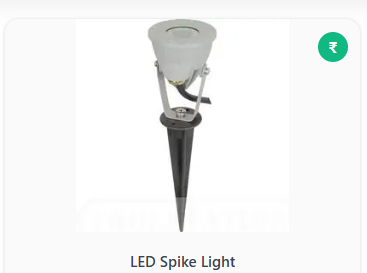
These are the most common entry-level solar lights you’ll spot on IndiaMART. They come with a pointed stake at the bottom, which makes installation effortless — just push them into the soil or grass.
Key Features:
-
Compact design, usually 30–50 cm tall.
-
Ideal brightness: 50–150 lumens per piece.
-
Best for accent lighting of flower beds, shrubs, and pathways.
-
Often made of ABS plastic or stainless steel.
-
Auto ON/OFF sensors included in most models.
Advantages:
-
Easy DIY installation, no tools needed.
-
Affordable — often available under ₹100–₹400 per piece.
-
Works well as decorative border lights.
Best Use-Cases:
-
Highlighting garden edges.
-
Surrounding fountains or small landscaping features.
-
Marking walking paths subtly.

🏮 2) Bollard / Post Lights
These lights are taller, cylindrical structures (60–120 cm height) designed for pathways, driveways, and garden entrances. On IndiaMART, you’ll see both metal-body bollards for durability and decorative designer styles for aesthetic appeal.
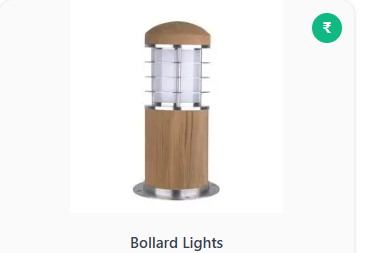
Key Features:
-
Brightness range: 200–600 lumens.
-
Stronger solar panels for better charging.
-
IP65+ water resistance for outdoor conditions.
-
Sleek modern look, often powder-coated or stainless steel.
Advantages:
-
Provide uniform, broader illumination compared to spike lights.
-
Durable and more weather-resistant.
-
Can double as stylish landscaping features.
Best Use-Cases:
-
Driveway lighting for cars.
-
Walkway/pathway lighting in residential societies.
-
Garden entrances or resorts where aesthetics matter.
🚶 3) Pathway (Strip) Lights
Pathway or strip lights are low-level linear lights that run along walkways, stairs, or perimeters. They’re designed less for decoration and more for safety and functionality.
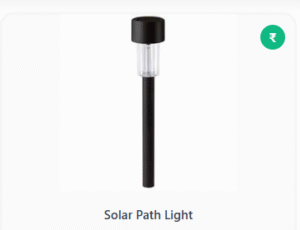
Key Features:
-
Often come in LED strips or modular units.
-
Provide continuous glow rather than spot lighting.
-
Brightness: 150–300 lumens (per meter or section).
-
Usually integrated with motion sensors for energy saving.
Advantages:
-
Prevents tripping hazards during nighttime.
-
Gives a clean, modern look to garden paths.
-
Ideal for outlining patios and decks.
Best Use-Cases:
-
Garden walkways.
-
Stairs in outdoor landscapes.
-
Poolside perimeters for both safety and aesthetics.
🧱 4) Wall / Step Lights
Wall or step solar lights are mounted fixtures that attach to walls, staircases, or boundary walls. Unlike spike lights, they don’t need soil installation.
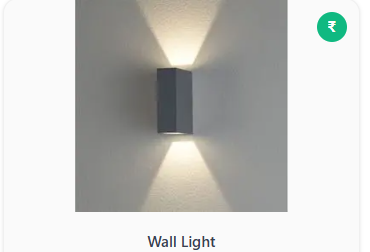
Key Features:
-
Compact, flat, and stylish in design.
-
Brightness: 100–300 lumens per light.
-
Mostly dusk-to-dawn sensors (auto ON at night).
-
Some models have motion detection for extra security.
Advantages:
-
Great for illuminating entrances and outdoor steps.
-
Prevents accidents on poorly lit stairs.
-
Adds a modern look to walls and fences.
Best Use-Cases:
-
Outdoor staircases and steps.
-
Boundary walls in homes or gated communities.
-
Front doors, garage areas, or garden walls.
✨ 5) Decorative Lanterns & Post Tops
These are designer solar lights focused on aesthetics. You’ll find them in IndiaMART listings under “lanterns,” “heritage solar lamps,” or “post-top solar lights.”
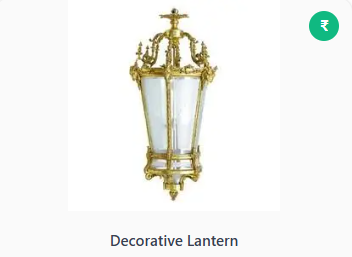
Key Features:
-
Artistic designs (lantern, Moroccan, Victorian, rustic).
-
Brightness varies — 100 to 500 lumens depending on size.
-
Warm white or RGB color-changing LEDs available.
-
Can be hung, placed on tables, or mounted on gate posts.
Advantages:
-
Adds decorative charm to outdoor spaces.
-
Perfect for festive seasons (Diwali, weddings).
-
Doubles as both light source and ornament.
Best Use-Cases:
-
Patios, balconies, and verandas.
-
Resorts, restaurants, and outdoor cafés.
-
Gate pillars or terrace gardens.
🌟 6) Solar Spotlights / Floodlights
These are high-power lights designed to throw strong beams on specific areas, such as trees, statues, or building facades. Floodlight variants cover wide areas, while spotlights focus on a single point.
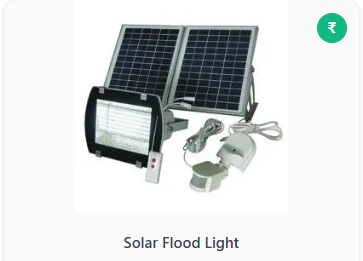
Key Features:
-
Brightness: 800–2,000+ lumens (very powerful).
-
Bigger solar panels (often separate from the light unit).
-
Built-in motion sensors for security applications.
-
Adjustable angle for targeted illumination.
Advantages:
-
Highlight landscaping features dramatically.
-
Ideal for security — bright enough to deter intruders.
-
Long run-time with large batteries.
Best Use-Cases:
-
Lighting tall trees or garden statues.
-
Floodlighting driveways or large compounds.
-
Security lighting around houses, warehouses, or farmhouses.
2) Key Specs to Check on IndiaMART Listings (don’t skip these)
To avoid disappointment, check these fields on every product page:
-
Battery type & capacity (mAh) — Lithium-ion batteries (3.7V) perform better and last longer than NiMH.
-
Solar panel wattage & material — Monocrystalline panels charge faster; polycrystalline are more affordable.
-
Lumens (brightness) — 50–200 lm = accent lighting; 200–800 lm = pathway/functional lighting.
-
Run-time — Look for 8–12 hours run-time on a full charge for consistent all-night light.
-
IP Rating (water/dust) — IP65 or higher for outdoor use (resists jets and rain).
-
Material & build (aluminium / ABS) — metal bodies last longer; ABS is lighter and cheaper.
-
Warranty & certifications — CE, RoHS, BIS (if available) and a seller warranty matter.
-
Automatic sensor modes — dusk-to-dawn, motion-sensor, dim-to-bright settings.
Why this matters: a bright light with a weak battery or tiny solar panel will die early in winter or on cloudy days. Always match lumens + run-time with the area you want to light.
3) Typical Price Ranges on IndiaMART (guideline)
On IndiaMART you can find a wide range of prices depending on quality and quantity. Typical ranges you’ll see:
-
Basic spike/lawn lights — ₹80 to ₹400 per piece (bulk discounts available).
-
Designer lanterns / bollards — ₹1,200 to ₹6,000 per piece.
-
High-power spotlights / floodlights — ₹1,500 to ₹8,000 per piece.
-
Wholesale/OEM lots — unit price can drop 20–60% depending on order size.
Tip: Request quotes from multiple suppliers on IndiaMART. Also, check minimum order quantity (MOQ) and shipping terms before you commit. Facebook
4) How to Compare Multiple IndiaMART Listings — Smart Checklist
Use this checklist when you shortlist products:
-
Confirm battery type & capacity (mAh)
-
Confirm solar panel wattage & cell type
-
Confirm lumens and run-time at full charge
-
Confirm IP rating (IP65+)
-
Ask for certificate copies (CE/RoHS/BIS)
-
Read buyer reviews and seller response time
-
Request warranty terms and replacement policy
-
Confirm shipping cost & lead time — especially for bulk orders
This approach speeds up decisions and reduces returns.
5) Installation & Placement Tips (do it once, do it right)
-
Position panels to face south (in India) and avoid shaded areas.
-
Angle panels to match local latitude for maximum year-round harvest.
-
Elevate panels slightly above grass or foliage to avoid shade.
-
Use spikes for ground lights — push into compact soil, or set in concrete for permanent fixtures.
-
Secure bollards on stable bases and use proper anchors in soft soil.
-
Test modes before permanent fixing — ensure dusk-to-dawn and motion settings work.
Additionally, rotate panels occasionally and check for debris or bird droppings — even small shading reduces charging a lot.
6) Maintenance & Troubleshooting (keep them bright for years)
-
Clean solar panels monthly with a soft cloth and mild detergent.
-
Replace battery every 2–3 years (depending on cycles).
-
Check seals and screws after monsoon season; re-tighten as needed.
-
If run-time drops, test panels in sunlight and check battery voltage.
-
For motion lights: adjust sensor angle and sensitivity as required.
A little maintenance extends life and keeps performance steady.
7) Buying Tips & Negotiation Pointers on IndiaMART
-
Ask for sample if you plan large orders — test one unit before bulk buy.
-
Negotiate price & shipping — many sellers accept offers if you order more.
-
Inquire about OEM/branding — useful if you want your label.
-
Check lead times in festive seasons; manufacturers get busy.
-
Prefer suppliers with IndiaMART Trust Seal or verified badges. Facebook
8) Eco & Financial Benefits (short math)
-
Solar lights need zero grid electricity.
-
If you replace 10 conventional outdoor LED fixtures (5W each for 6 hrs/day) with solar, you could save ~₹500–₹1,200/year in electricity (depends on local tariffs).
-
Also, solar reduces wiring costs and installation complexity.
In short, payback can be fast for high-use areas, and you gain resilience during outages.
9) Example Use-Cases (inspire your layout)
-
Pathway lighting — safer nightly walks.
-
Accent lighting for trees/feature plants — dramatic landscaping.
-
Deck and patio ambient lights — create warm evenings.
-
Security motion-lights — conserve power until movement is detected.
10) Sample Email/Message to Send to an IndiaMART Seller
Hello, I’m interested in your Solar LED Garden Light (model name). Please share: battery specs (mAh & chemistry), solar panel wattage, lumen output, IP rating, sample price, MOQ, bulk pricing (for 100 units), and warranty terms. Also, do you provide product certification (CE/BIS)? Thanks — Rakesh.
Use this template to save time and get precise answers.
FAQs (short & actionable)
Q1: Do Solar LED Garden Lights work on cloudy days?
Yes, they still work but run-time reduces. Choose larger batteries and better panels for cloudy climates.
Q2: How long do batteries last?
Typically 2–3 years for NiMH; 3–5 years for good lithium batteries, depending on cycles.
Q3: Are IndiaMART sellers reliable?
Many are reliable; verify badges, ratings, and ask for references or samples before bulk purchasing. Facebook
Q4: What IP rating is enough for outdoors?
IP65 or higher is recommended for rain-exposed installations.
Q5: Can I retrofit with existing wiring?
You can, but solar is best installed as standalone without grid wiring to keep costs low.
Final Checklist Before You Buy (one-line reminders)
-
Battery type & capacity — confirmed.
-
Solar panel wattage — confirmed.
-
Lumens & run-time — matches your need.
-
IP rating — IP65+.
-
Warranty & certifications — available.
-
Samples tested — yes (if bulk).
-
Shipping & lead-time — acceptable.