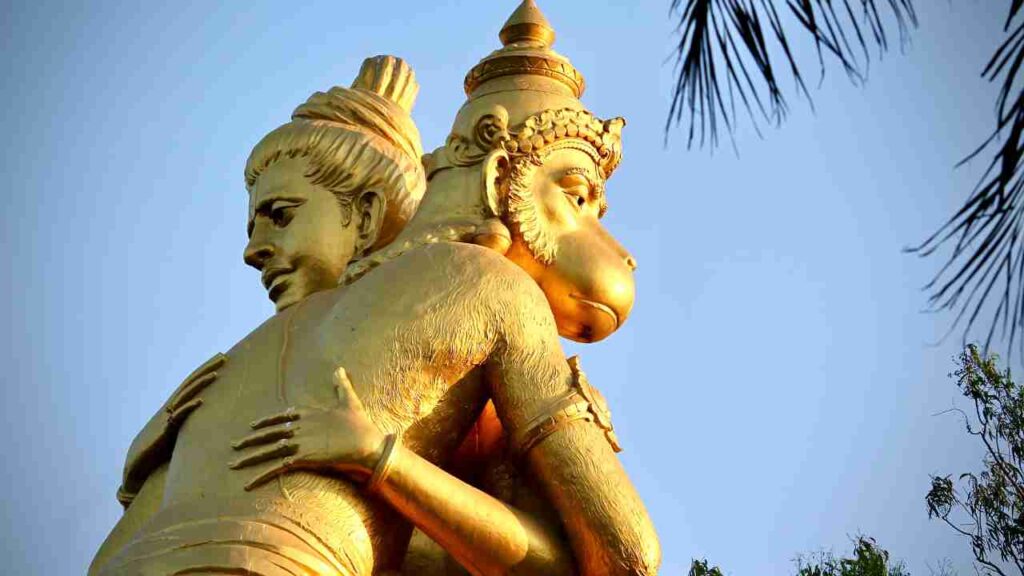
Swaminarayan Akshardham in Delhi is one of India’s most magnificent spiritual and cultural landmarks. Located near the banks of the Yamuna River, this grand Hindu temple complex showcases the richness of traditional Indian architecture, devotion, and timeless values. Built by BAPS and inaugurated in 2005, Akshardham is not just a place of worship but a breathtaking blend of art, history, spirituality, and modern technology that attracts millions of visitors from around the world.
Key Takeaways:
- What makes this temple structurally unique? The Akshardham Mandir was built entirely without steel or concrete – following traditional Hindu architectural guidelines (Shilpa shastras), it relies solely on Rajasthani pink sandstone and Italian Carrara marble for support. This ancient construction technique is pretty remarkable when you consider the temple stands 141 feet high and 316 feet wide. The base features an incredible plinth called Gajendra Pith with 148 life-sized elephants weighing 3000 tons total.
- The complex holds a legitimate world record with the Yagnapurush Kund, which is India’s largest stepwell. This massive musical fountain measures 300 by 300 feet and contains 2,870 steps with 108 small shrines arranged around it. The 24-minute water show called Sahaj Anand uses laser lighting, video projections, underwater flames, and live actors to tell a story from the Kena Upanishad… it’s basically an ancient spiritual story told through cutting-edge technology.
- Construction happened incredibly fast – the entire complex was completed in just under five years. Work began on November 8, 2000, and the temple officially opened on November 6, 2005. When you think about the intricate details involved (234 carved pillars, nine domes, countless sculptures), that timeline seems almost impossible. Thousands of volunteers and artisans worked on the project under the guidance of eight swamis who’d previously worked on the sister temple in Gandhinagar.
- The temple features some seriously impressive artistic details throughout. There are 234 ornately carved pillars and nine domes, with every surface decorated with flora, fauna, dancers, musicians, and deities. The central murti of Swaminarayan stands 11 feet tall and is made from pañcadhātu (five sacred metals). The Hall of Values even contains the world’s smallest animatronic robot in the form of Ghanshyam Maharaj, Swaminarayan’s child form.
- The Narayan Sarovar lake surrounding the monument contains water from 151 different rivers and lakes across India that were sanctified by Swaminarayan, including the holy Lake Mansarovar. Water flows from 108 gaumukhs (cow-shaped spouts) representing the 108 names of God. This kind of symbolic integration of sacred geography from across India into one location is pretty unique.
- Environmental controversies surrounded the construction, but the Supreme Court of India ruled twice in favor of the temple. Critics claimed it was built on Yamuna River floodplains without proper clearances. The Supreme Court found in 2005 and again in 2009 that all permissions were obtained from bodies like the Central Water Commission and NEERI, and that the site was actually 1700 meters away from the river bank, not on the floodplain itself.
- The complex offers way more than just a temple – it’s an entire cultural experience. You’ve got Delhi’s first large-format screen (85 by 65 feet) showing a 40-minute film about Swaminarayan’s teenage pilgrimage, a 12-minute boat ride through Vedic Indian history with life-size robotic figures, the AARSH research centre for social harmony studies, and Bharat Upavan garden with bronze sculptures of Indian historical figures. There’s even a vegetarian restaurant designed to look like the Ajanta and Ellora caves.

Wait, there’s actually zero steel in this thing?
You’re looking at a structure that stands 43 meters high, 96 meters wide, and 109 meters long – and there’s not a single piece of steel holding it together. Built according to ancient Vastu shastra and Pancharatra shastra guidelines, Akshardham follows traditional principles that completely forbid ferrous metals, so architects relied entirely on Rajasthani pink sandstone and Italian Carrara marble to create this massive temple.
The real deal with the stone construction
Stones interlock through precise carving and traditional joinery techniques that have held structures together for thousands of years. 234 intricately carved pillars and nine domes support the entire weight distribution without concrete reinforcement, proving ancient engineering methods can still outperform modern shortcuts when executed with skill and patience.

Why the Māru-Gurjara style’s so cool
The Māru-Gurjara architectural style originated in Gujarat and Rajasthan, combining intricate stone carving with mathematical precision. This medieval style creates structures that breathe and flex slightly with temperature changes, which actually makes them more earthquake-resistant than rigid steel-frame buildings.
Temples built in this style feature those distinctive pyramidal spires and incredibly detailed surface ornamentation you’ll see covering every inch of Akshardham. The style emerged between the 6th and 12th centuries and became famous for creating some of India’s most spectacular temple complexes – places where stone seems to defy gravity through sheer artistic genius. What makes it perfect for a steel-free structure is that Māru-Gurjara architects developed load-bearing techniques using corbelled arches and precisely cut stones that distribute weight so efficiently you don’t need modern materials at all.
Check out what’s inside the main Mandir
You’ll want to spend serious time exploring the mandir’s interior because there’s so much to take in. The Gajendra Pith forms the temple’s base – a massive plinth featuring 148 life-sized elephants weighing 3,000 tons total. Under the central dome, you’ll find an 11-foot murti of Swaminarayan crafted from pañcadhātu (five metals) in the abhayamudra posture, plus murtis of Sita-Rama, Radha-Krishna, Shiva-Parvati, and Lakshmi-Narayana.
Why I think the elephants are the best part
Walking around the base and seeing all 148 elephants up close is absolutely breathtaking – each one’s unique and incredibly detailed. These aren’t small decorative pieces either… we’re talking 3,000 tons of carved stone that forms the entire foundation. The craftsmanship on each elephant’s expression and posture shows you just how much care went into this project.
The murtis and the central dome
Standing beneath the central dome, you can’t help but stare up at the 11-foot Swaminarayan murti made from five different metals in the abhayamudra (blessing) posture. The mandir houses additional murtis including Sita-Rama, Radha-Krishna, Shiva-Parvati, and Lakshmi-Narayana, all surrounded by images of the faith’s guru lineage.
What makes the central murti so special is the pañcadhātu composition – this traditional five-metal alloy gives it this incredible golden sheen that catches light differently throughout the day. You’ll notice how the abhayamudra hand gesture (raised palm facing outward) symbolizes protection and fearlessness, which feels pretty powerful when you’re standing right there looking up at it. The surrounding deity murtis aren’t just randomly placed either… they’re positioned to represent different aspects of divine love and devotion, with each pair telling its own story from Hindu scriptures. And those guru images circling everything? They connect the entire spiritual lineage from ancient times to the present day, making you feel like you’re part of something that stretches back centuries.
The exhibits are honestly like a theme park
You’ll walk through attractions that rival anything Disney’s created, except these teach you about ancient Indian philosophy and morality. The Sahajanand Darshan features 15 3-D dioramas alongside animatronic displays that bring spiritual lessons to life. But here’s the kicker – you’ll meet Ghanshyam Maharaj, the world’s smallest animatronic robot, who guides you through moral teachings in a way that’s surprisingly captivating.
Robots and dioramas in the Hall of Values
Sahajanand Darshan transforms spiritual education into an immersive experience you won’t forget. The world’s smallest animatronic robot, Ghanshyam Maharaj, interacts with visitors through 15 detailed 3-D dioramas that illustrate timeless moral principles. Each scene uses cutting-edge technology to make ancient wisdom feel accessible and engaging for modern audiences.
The IMAX experience and the boat ride
Nilkanth Darshan theatre showcases the Neelkanth Yatra film on an 85-by-20-foot screen that completely surrounds your field of vision. You can also experience Sanskruti Vihar, a 12-minute cultural boat ride that floats you through 10,000 years of Vedic Indian history with animatronic scenes and special effects.
The Neelkanth Yatra film became so popular that it was adapted into Mystic India and released globally in IMAX theatres, bringing Akshardham’s storytelling to international audiences. This large-format version follows the incredible journey of an 11-year-old yogi across India, and the production quality rivals major Hollywood documentaries. The boat ride, meanwhile, takes you past elaborate sets depicting ancient Indian civilization – from Vedic scholars to traditional village life – all while you’re gently floating along in climate-controlled comfort.
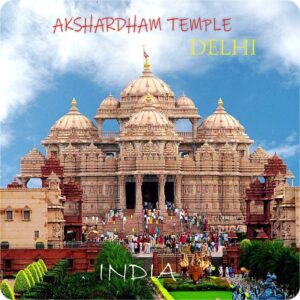
FEW AKSHARDHAM TEMPLE PRODUCTS TO BUY


The Water Show and Gardens Are a Big Deal
You’ll find yourself spending hours in the outdoor areas because there’s just so much to see. The Yagnapurush Kund holds the title of India’s largest stepwell, stretching an incredible 300 by 300 feet with 2,870 steps and 108 small shrines dotting its massive structure. The Bharat Upavan garden showcases bronze sculptures celebrating Indian heroes, while the Narayan Sarovar lake features 108 gaumukhs spouting water collected from 151 sacred rivers and lakes across India.
India’s Biggest Stepwell and the Laser Show
The Yagnapurush Kund transforms into a spectacular theater every evening when the Sahaj Anand water show begins. This 24-minute production brings the ancient Kena Upanishad to life through choreographed fountains, lasers, and projections dancing across the stepwell’s surface. You’ll want to grab your spot early because this show draws massive crowds.
Sacred Waters and the Cave-Themed Food Court
Narayan Sarovar isn’t just pretty to look at – it contains actual water from 151 holy rivers and lakes flowing through 108 carved gaumukhs (cow-shaped spouts). The number 108 keeps appearing throughout Akshardham because it’s considered sacred in Hindu tradition. After exploring, you can head to the Premvati Food Court designed like ancient caves.
The food court itself deserves a visit even if you’re not hungry because the architecture mimics natural cave formations with stone walls and atmospheric lighting. You’ll find traditional Gujarati thalis, North Indian dishes, and vegetarian options (the entire complex is vegetarian-only). The cave theme continues the temple’s commitment to creating immersive experiences rather than just functional spaces. Prices are reasonable considering you’re at a major tourist attraction, and the air-conditioned interior offers welcome relief after hours of walking through the complex.
Is it actually legal and how do you get there?
You might’ve heard some controversy about Akshardham’s construction, but the Supreme Court of India settled this debate in both 2005 and 2009, ruling the temple completely lawful. The court confirmed it’s not built on a floodplain since it sits 1,700 meters away from the Yamuna River bank and obtained all necessary environmental clearances.
What the Supreme Court said about the environment
Legal challenges questioned whether the temple violated environmental regulations, but India’s highest court ruled twice in favor of the construction. The justices determined that sitting 1,700 meters from the river bank placed it safely outside any floodplain zone, and all proper clearances had been secured before building began.
Getting there by metro and the research center
Your journey to Akshardham couldn’t be easier – just hop off at Akshardham Metro Station on the Blue Line. The complex also houses the AARSH research center, where scholars dedicate their work to studying social harmony, education, and rural welfare initiatives across India.
Planning your visit is refreshingly straightforward because the Delhi Metro drops you practically at the temple’s doorstep. The Akshardham station on the Blue Line was specifically designed to handle the massive crowds that visit this site daily, and you’ll find clear signage directing you from the platform to the entrance. What many visitors don’t realize is that beyond the stunning temple architecture, the complex serves as a serious academic hub through its AARSH research center. Scholars there aren’t just studying abstract concepts – they’re actively researching practical solutions for social harmony, developing educational programs, and creating strategies for rural welfare that impact communities throughout India. So while you’re there marveling at the stone carvings, remember there’s genuine research work happening behind the scenes that extends the temple’s mission beyond just religious worship.
Final Words
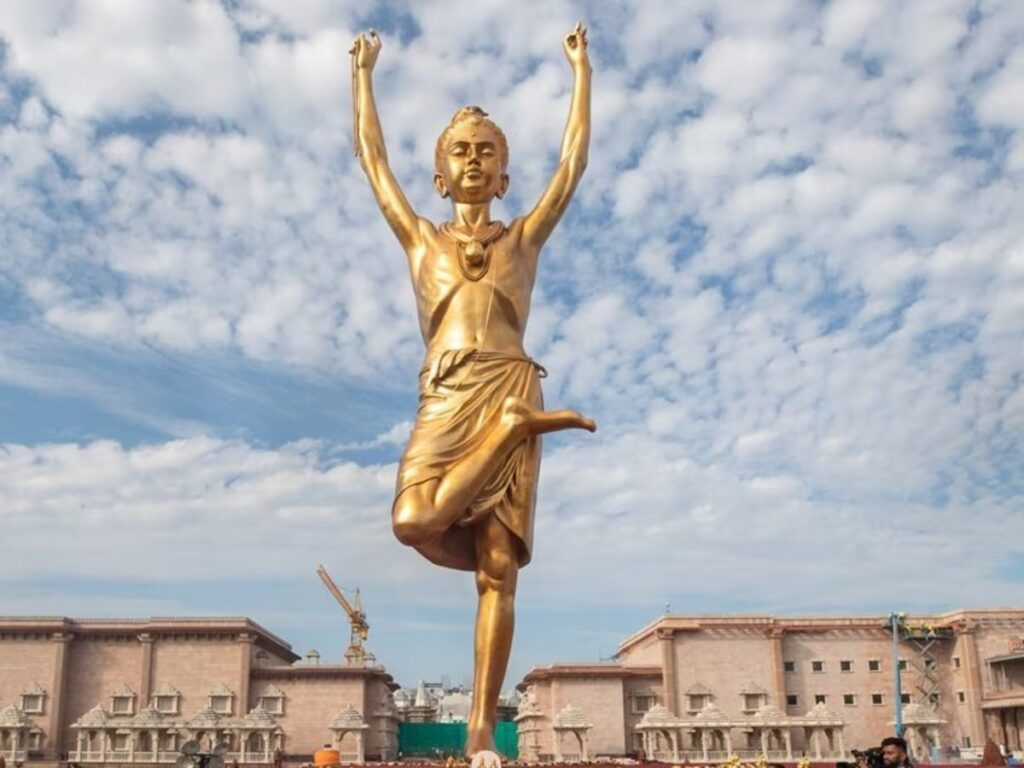
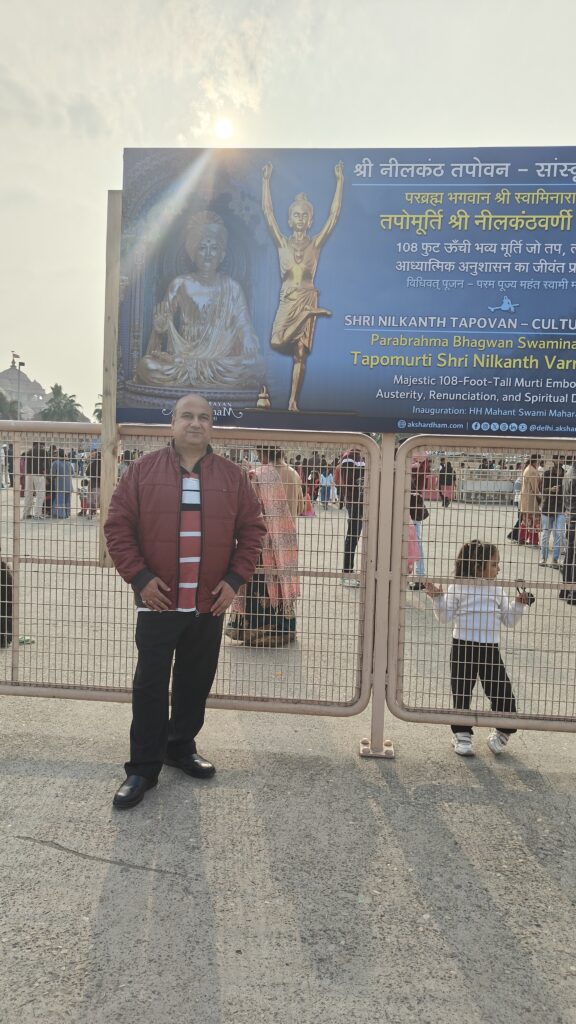
Taking this into account, you’ve just explored one of the most extraordinary architectural achievements of our time. Akshardham Delhi stands as a breathtaking fusion of ancient wisdom and modern innovation, all without using a single piece of steel or concrete. From the cave-inspired Premvati Food Court to that stunning 27-foot bronze murti of Nilkanth Varni, every corner tells a story of traditional craftsmanship and spiritual devotion that you simply won’t find anywhere else.
FAQ
Q: Why was Akshardham Delhi built without any steel or concrete?
A: The temple follows ancient Hindu architectural guidelines called Shilpa shastras, which dictate that sacred temples should be constructed without ferrous metals. This traditional approach means the entire structure relies on precisely carved stone pieces that fit together through intricate engineering and craftsmanship. The architects used Rajasthani pink sandstone and Italian Carrara marble, carefully designing each element to support the massive structure naturally. This construction method has been used in Hindu temples for thousands of years, and Akshardham proves these ancient techniques still work for modern buildings. The result is a 141-foot-high temple that stands strong without a single steel beam or concrete support.
Q: What world record does Akshardham hold?
A: Akshardham is home to India’s largest stepwell, the Yagnapurush Kund, which also functions as a musical fountain. This massive structure measures 300 by 300 feet and features 2,870 steps leading down to a traditional yagna kund in the center. The stepwell hosts the Sahaj Anand water show, a 24-minute multimedia presentation that combines laser lighting, video projections, underwater flames, water jets, and live actors. The fountain’s design follows the Jayaakhya Samhita of the Pancharatra shastra and includes 108 small shrines arranged around the central lotus-shaped basin. International experts worked alongside BAPS volunteers and swamis to create this record-breaking feature.
Q: How long did it take to build Akshardham Delhi?
A: Construction began on November 8, 2000, and the temple officially opened on November 6, 2005 – just two days short of five years. But the planning started way back in 1968 when Yogiji Maharaj first expressed his vision for a grand temple on the banks of the Yamuna River. The actual land wasn’t secured until April 2000, when the Delhi Development Authority offered 60 acres and the Uttar Pradesh Government provided another 30 acres. Pramukh Swami Maharaj performed puja on the site before construction started, blessing the project. The relatively quick construction timeline is impressive considering the temple’s massive size and the complex traditional building methods used.
Q: What are the main attractions inside the Akshardham complex?
A: The complex offers way more than just the temple itself. The Hall of Values features 15 three-dimensional dioramas with robotics and special effects that tell stories from Swaminarayan’s life – it even has the world’s smallest animatronic robot. There’s a massive IMAX theater with an 85 by 65-foot screen showing a 40-minute film about Swaminarayan’s teenage pilgrimage across India. The Sanskruti Vihar boat ride takes you on a 12-minute journey through ancient Vedic India using life-size figures and robotics. You can also explore the Bharat Upavan garden with bronze sculptures of important Indian historical figures, walk around the Narayan Sarovar lake containing water from 151 sacred rivers, and watch the spectacular musical fountain show. There’s even a vegetarian restaurant designed to look like the Ajanta and Ellora caves.
Q: What makes the main temple structure so impressive architecturally?
A: The Akshardham Mandir is absolutely massive – 141 feet high, 316 feet wide, and 356 feet long. Every surface is covered with intricate carvings of flora, fauna, dancers, musicians, and deities. The temple contains 234 ornately carved pillars and nine domes, all constructed using the traditional Māru-Gurjara architectural style. At the base sits the Gajendra Pith, a plinth featuring 148 life-sized elephant sculptures that weigh a combined 3,000 tons. Inside, under the central dome, you’ll find an 11-foot-tall murti of Swaminarayan surrounded by images of the faith’s lineage of gurus.