Most food trends on your feed right now are about quick desserts and shortcut recipes, but you keep seeing those iconic K.C. Das cans pop up, right, and you wonder what the big deal is. When you crack open that tin, you’re not just getting sweets, you’re tapping into 150+ years of Kolkata’s rosogolla legacy that started in a tiny Bagbazar kitchen and quietly went on to change how India eats dessert.
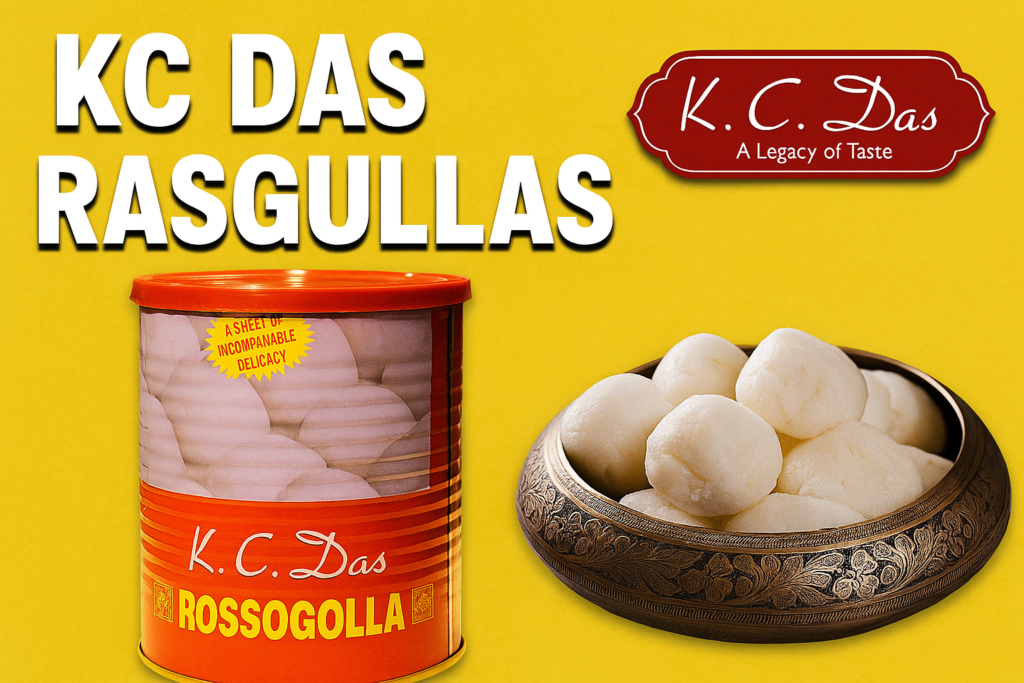
Every can in your pantry is literally history you can eat, anytime you like.
Most sweets come and go in your life, but K.C. Das canned rosogolla quietly sticks around in your kitchen and your memories, because you’re not just opening a tin, you’re opening over 150 years of Bengali sweet history. You get this crazy mix of comfort and legacy in one bite – soft, spongy chhena soaked in light syrup that still tastes authentically Kolkata even if you’re miles away. And that’s the real kicker – you can stash it, gift it, travel with it, yet every can still feels like a fresh slice of heritage.
Key Takeaways:
- Social media food hauls have quietly turned canned rosogolla into a pantry staple, and K.C. Das sits at the center of that trend with a story that stretches back to 1868 and the original invention of the soft, spongy rosogolla in Kolkata.
- Nobin Chandra Das kicked off a full-on sweet revolution by perfecting chhena-based rosogolla, while his son K.C. Das took it further with rasomalai and, more importantly, the world’s first vacuum-sealed canned Indian dessert in 1930.
- The company’s shift from a single Kolkata shop to a legally incorporated brand in 1946 meant rosogolla could move from local mithai counter to national (and later global) shelves without losing its Bengali identity.
- K.C. Das canned rosogolla still stands out because it protects that signature soft texture and light syrup, so what you open at home feels surprisingly close to what you’d get at an old-school Kolkata sweet shop.
- Convenience is half the charm: a 900 g can with around 20 rosogollas lets you deal with random sugar cravings, last-minute guests, festival gifting, or travel treats without hunting for a trusted sweet shop.
- Each can doubles as edible nostalgia – you’re not just eating dessert, you’re tapping into 150+ years of culinary heritage, family innovation, and the story of how one Bengali sweet became “national dessert” material.
- The global reach of K.C. Das canned rosogolla means that for a lot of non-Bengalis and NRIs, this specific can is their first, and often defining, experience of what rosogolla tastes like – which is exactly why it still rules the shelf.
Products of K.C. DAS ROSOGOLLA
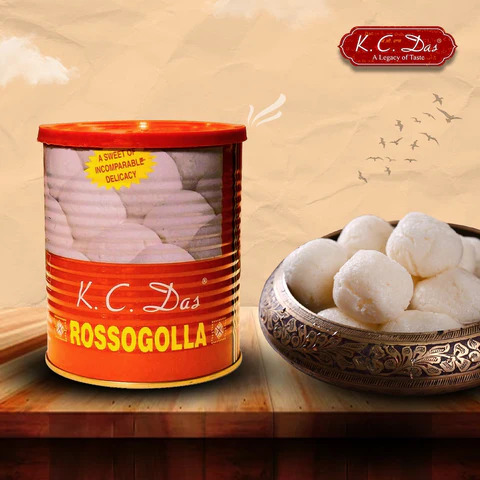
1. K.C. Das Rosogolla
KC Das Canned Rossogolla: Savor the Magic of Bengal Anytime, Anywhere. You can enjoy the taste of these iconic soulful Bengali spongy chhana balls dipped in sugar syrup, no matter where you are in India.
2. Soan Papri 500 Gms
Indulge in the delectable sweetness of KC Das Soanpapri, a traditional Indian dessert that promises to melt in your mouth with every bite.
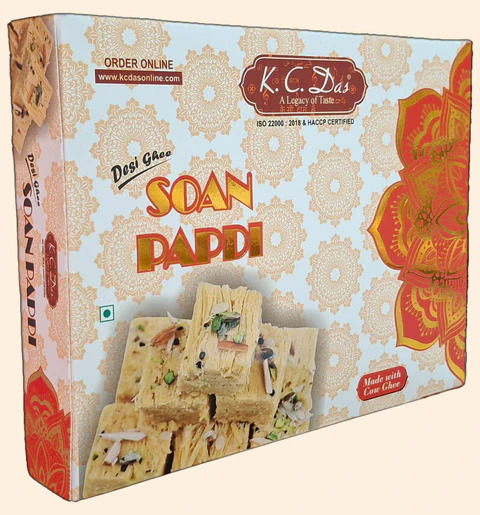
Made with the finest ingredients, including sugar, gram flour, pure cow ghee, pistachio, cardamom, and an assortment of premium nuts, this 500-gram pack is the perfect treat for any occasion.
3. Canned Kesar Gulab Jamun (20pcs)
Experience the magic of Bengal’s most cherished sweet – the Gulabjamun – with KC Das’s convenient and delicious Canned Keshar Gulabjamun.
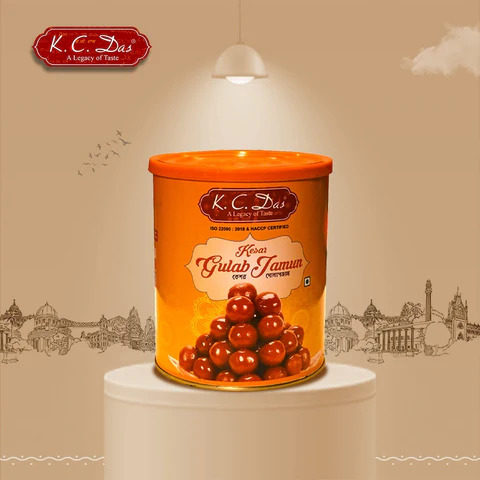
This 1kg can is packed with approximately 20 melt-in-your-mouth Gulabjamuns, infused with the delicate aroma of saffron (keshar), ready to satisfy your sweet tooth whenever the craving strikes.
4. Canned Kalajamun (20 pcs)
Experience the magic of Bengal’s most cherished sweet – the Kalajamun – with KC Das’s convenient and delicious Canned Kalajamun.
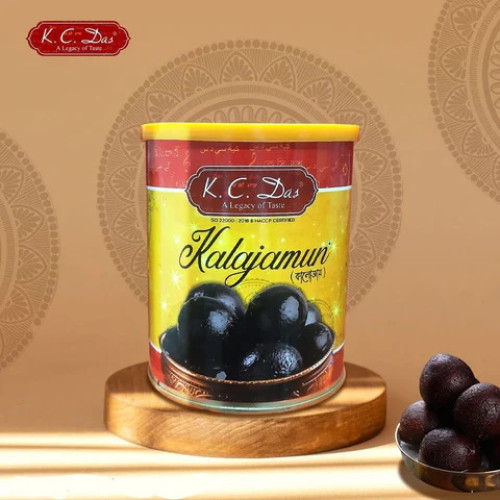
This 1kg can is packed with approximately 20 melt-in-your-mouth Kalajamun, Ready to satisfy your sweet tooth whenever the craving strikes.
What’s the Big Deal About Rosogolla Anyway?
What other Indian sweet can claim it literally changed how desserts travel across continents? You’re biting into a soft chhena ball that was perfected in 1868, refined over decades, then packed into a vacuum-sealed can in 1930 so it could sit in your pantry for months and still stay spongy, airy and surprisingly light. For a lot of non-Bengalis, your first rosogolla probably came from a 900 g K.C. Das tin – around 20 pieces of history, culture and comfort sitting quietly on your kitchen shelf, waiting for that midnight spoon.
What’s the Big Deal About Rosogolla?
Scroll through Instagram during Durga Puja or Diwali and you’ll notice it – rosogolla is everywhere, sitting proudly in mithai boxes and K.C. Das cans. You’re not just biting into sugar and chhena; you’re tasting a sweet invented in 1868 that still dominates dessert tables in 2025. Very few Indian sweets have this kind of staying power, scale, and emotional pull, making rosogolla less of a dessert and more of a shared cultural habit.
The Magic Behind That Fluffy Texture
That bouncy, cloud-like bite you love is all about how your chhena is treated. Freshly curdled cow’s milk, kneaded just enough, rolled into smooth balls, then cooked in precisely balanced light sugar syrup so they expand without turning rubbery. Get the protein structure or temperature slightly off and you’ll end up with dense, cracked, or collapsed rosogollas – which is exactly why consistent factory processes at K.C. Das feel like sorcery in a can.
A Sweet Journey Through Time
Every time you open a K.C. Das can, you’re basically fast-traveling from your kitchen to 19th-century Bagbazar. Nobin Chandra Das created this white, spongy rosogolla in 1868, his son K.C. Das canned it in 1930, and by 1946 Sarada Charan Das had turned it into a registered company. In just a few generations, your everyday dessert went from a small Kolkata workshop to a product shipped across India and abroad, quietly carrying Bengal’s story into your celebrations.
What makes this journey even more wild is how naturally rosogolla slipped into your life. One invention in a Bagbazar kitchen turned into a neighborhood craze, then a Kolkata staple, then, with that 1930 vacuum-sealed can, a national dessert that could sit on shelves for months without losing its soul. By the time K.C. Das Pvt. Ltd. was formalised in 1946, you already had Indians in other states treating rosogolla as “their” sweet too. And now, whether you’re in Bengaluru, Boston or Berlin, you can crack open a 900 g can, spoon out around 20 syrupy balls, and participate in a 150-year-old tradition without ever stepping into Bagbazar – that’s the quiet power of this little white sweet.
Meet the Master – Nobin Chandra Das & His Sweet Genius
You’d never guess it, but your soft, spongy rosogolla obsession started in a tiny Bagbazar workshop in 1868, with Nobin Chandra Das quietly tinkering with fresh milk, chhena and syrup like a food scientist before the term existed. By curdling litres of milk at a time, testing different sugar concentrations, and perfecting that 1:1 balance of softness and bite, he created the iconic white rosogolla that turned into Bengal’s default celebration sweet. Every time you open a tin today, you’re basically biting into Nobin’s original experiment – scaled for your modern pantry.
K.C. Das – Carrying the Torch of Tradition
Instead of stopping at Nobin Chandra’s genius, K.C. Das doubled down on it and pulled your favorite sweet into the modern world. You get the same classic chhena-and-syrup formula from 1868, yet it now sits in a vacuum-sealed can first introduced in 1930, scaled up through a company formally incorporated in 1946. So every time you pop open that 900 g tin, you’re tasting a recipe guarded across three generations, not a random factory shortcut.
Why Canned Rosogolla is a Game Changer
In 1930, when K.C. Das first vacuum-sealed rosogolla in tins, he quietly solved a problem you still face today: how do you get fresh-tasting Bengali sweets without living anywhere near Bagbazar. Instead of rushing to a mithai shop before stock runs out or the sweets turn sour in a day, you just pop open a 900 g can, and there are roughly 20 pieces waiting for you – soft, soaked, consistently good every single time. For you, that mix of heritage plus sheer convenience is what really changes the game.
My Take on K.C. Das: The Sweet Legend
K.C. Das is that rare brand where hype actually matches what’s inside the can. When you taste their rosogolla, you feel how 150+ years of tinkering with chhena, sugar and heat turned into something your taste buds instantly trust. You get proper structure, not soggy sponge, and syrup that’s sweet but not headache-inducing. And in a world full of shortcuts, it quietly proves that consistency, not just nostalgia, is what keeps you reaching for “one more piece”.
From Father to Son – Keeping the Legacy Alive
You can almost trace every soft bite back to that father-son relay between Nobin Chandra and K.C. Das, then to Sarada Charan who formalised it all in 1946. What you enjoy today is basically a family-run R&D lab in disguise, where recipes aren’t just guarded, they’re lived with daily. So when you open that 900 g can, you’re not just buying sweets, you’re tasting a lineage that refused to dilute itself even while scaling up for the whole world.
Innovation: Not Just Sticking to Tradition
What really hooks you is how K.C. Das treats innovation like a habit, not a marketing buzzword. Back in 1930, vacuum-sealed canned rosogolla wasn’t just a tweak, it was a category-creating leap that turned a local mithai into a global traveler. And when you see rasomalai join the lineup or notice how neatly the cans survive long-distance shipping, you realise this brand keeps asking a simple question: how can your next bite be softer, safer, more accessible – without losing that old Kolkata soul?
Think about it this way: if they could figure out canning rosogolla in 1930 with limited tech, what do you think they’re doing now with modern food science on their side? You’re getting cans designed to handle cross-country logistics, quality checks that keep chhena texture intact for months, and packaging that lets an NRI in London or Dubai taste almost the same rosogolla you’d get in a Kolkata shop. That mix of lab-like precision and street-side nostalgia is exactly why their “innovation” feels invisible on the surface – you just experience it as consistently good mithai that somehow survives time, travel and your high expectations.
My Take on the Perfect Serving Suggestions
How You Should Actually Serve That Can
I still think about a winter evening when we chilled a full 900 g can, then served 3 rosogollas each in small kullads with just a spoon of leftover syrup – it vanished in under 5 minutes. For you, try this: chill the tin for at least 2 hours, squeeze each piece very lightly, then pour over reduced syrup infused with a pinch of cardamom. And if you’re hosting 6-8 people, plate 2 pieces with a drizzle of cold milk and some chopped pistachios – suddenly it feels like a plated dessert at a fancy place.
Here’s Where to Snag Your Own Canned Delight
You’ve got options now that Nobin’s bazaar classic sits on global shelves – you can grab the 900 g K.C. Das can (roughly 20 rosogollas) from big e-commerce sites, quick-delivery grocery apps, or even NRI-focused stores that ship abroad. In many Indian cities, premium supermarkets keep it in the sweets or imported foods aisle, so you can just toss it into your cart with daily importants. Just make sure you check seal integrity, expiry date and storage instructions before you stock up your pantry.
Final Words
Presently, if you care about taste, convenience and a bit of story behind what lands on your plate, K.C. Das canned rosogolla quietly ticks all those boxes for you. You’re not just opening a tin of sweets, you’re cracking open a piece of Kolkata’s heritage that you can share at your own table – anytime, anywhere. So when you want something easy yet genuinely special for your guests, your family, or just your late-night cravings, this is one of those rare classics you can trust to show up, every single time.
Why Canned Rosogolla Still Rules the Snack Scene
You know that moment when guests land up unannounced and you “magically” pull out a dessert that tastes like it came straight from a Kolkata mishtir dokan? That’s exactly why canned rosogolla still owns your snack shelf. With around 20 pieces in a 900 g tin, long shelf life, and authentic chhena texture intact, you’re basically keeping 150+ years of Bengal’s sweet history sitting quietly in your pantry, waiting for the next craving or celebration to show up.
Convenience, Anyone?
Picture this: it’s 11 pm, everything’s shut, and suddenly you want something properly indulgent – you just twist a tin opener and there you go. No queues, no travel to Kolkata, no last-minute mithai shop panic. A single 900 g can gives you roughly 20 rosogollas that stay good for months, ready for festivals, travel, gifting or random late-night sugar attacks. You get mithai-shop vibe, supermarket practicality.
The Taste That Won’t Quit
What keeps you coming back isn’t just nostalgia, it’s that K.C. Das still sticks to fresh chhena and light syrup so the rosogolla stays soft, bouncy and never sickly-sweet or rubbery. Even after weeks in a can, the texture feels surprisingly close to what you’d eat in Kolkata, which is wild when you think this format started in 1930. You pop one, then another, and suddenly the “I’ll just taste one” promise is gone.
On a flavour level, you’ll notice the syrup is deliberately light, so your palate doesn’t tire out even after 3 or 4 pieces – that balance is what makes it addictive. The chhena balls soak just enough syrup to stay juicy without falling apart, giving you that classic spring-back bite food historians keep raving about in features on K.C. Das. And because there are no weird artificial shortcuts, you taste clean dairy, gentle sweetness and tradition all at once, which is exactly why, even with fancy modern desserts everywhere, you still find yourself reaching for that familiar tin again and again.
FAQ
Q: Why does the story of K.C. Das and canned rosogolla even matter to someone like me?
A: If you love sweets or just like knowing the backstory of what you eat, this one hits differently because it’s not just sugar and chhena, it’s 150+ years of family obsession packed into a can on your kitchen shelf. When you open a K.C. Das rosogolla tin, you’re basically tapping into a line that started in 1868 in a tiny Kolkata sweet shop, with Nobin Chandra Das quietly reinventing dairy into something soft, spongy and totally addictive.
What makes it matter to you is simple – you’re getting the comfort of a homely Indian mithai that also happens to be one of the first truly “globalised” Indian desserts, so that same can could be on a shelf in Kolkata, Bengaluru or Berlin.
And that feeling that you’re tasting something that your grandparents might have eaten in more or less the same way
that’s pretty special.
Q: How did rosogolla actually start, and what role did Nobin Chandra Das play in this sweet saga?
A: The rosogolla story really kicks off with Nobin Chandra Das in Bagbazar, Kolkata, in 1868, experimenting with fresh milk like a stubborn artist who refuses to quit. He took chhena (curdled milk), rolled it into these delicate balls, and cooked them gently in a light sugar syrup till they turned soft, airy and spongy – not dense, not crumbly, just that perfect cloud-like bite.
Before this, sweets were often heavier, denser, more syrup-loaded, but Nobin’s version turned into a game changer for Bengal, then for the rest of India. What you now casually pick up as “rosogolla” from a can or a sweet shop is basically the evolution of that one experiment that clicked and became the centerpiece of festivals, pujas and those sudden family dessert runs after dinner.
So when you hear people passionately debating “real” rosogolla texture, they’re, in a way, defending that original Nobin-style magic.
Q: What exactly did K.C. Das do differently from his father to make rosogolla such a big deal across India?
A: Krishna Chandra Das, or K.C. Das, didn’t just inherit his father’s sweet recipes, he took that legacy and put it on a locomotive. Born in 1869, he respected the old ways, but he was also the kind of person who looked at a traditional sweet and thought, “Ok, cool, now how do I make this travel?”
He created rasomalai, which is now another legend in its own right, but his real masterstroke was in 1930 when he came up with vacuum-sealed canned rosogolla – the first ever canned Indian dessert. That meant you no longer had to be anywhere near Kolkata to taste a proper rosogolla that still felt soft, juicy and legit.
He opened a shop in Jorasanko with his son Sarada Charan Das and slowly what started as a neighborhood thing morphed into a brand that could ship Bengal’s sweetness to anyone, anywhere, without losing its soul in transit.
Q: What makes K.C. Das canned rosogolla taste so authentic compared to random store brands?
A: If you’ve tried different brands, you already know not every rosogolla hits that perfect soft-bouncy-syrupy balance; some are too chewy, some feel like sugary rubber balls, and some are just flat-out way too sweet. K.C. Das sticks close to the OG formula – fresh chhena, gentle cooking, light sugar syrup – so the texture stays airy and the sweetness doesn’t punch you in the face.
Inside a standard 900 g can, you usually get around 20 pieces sitting in syrup that’s sweet but not sticky-heavy, which makes it ridiculously easy to eat “just one more”. The company treats the can almost like a time capsule, trying to keep the flavor and mouthfeel as close to a Kolkata sweet shop experience as possible.
In short, you’re paying for heritage plus consistency, not just for any random round sweet in a tin.
Q: Why do people still swear by canned rosogolla when you can just buy fresh from local mithai shops?
A: Fresh sweets are amazing, no doubt, but there are days when running to a sweet shop just doesn’t fit into your life, or you’re not even in a place where good Bengali mithai is easy to find. This is where canned rosogolla becomes that handy little luxury sitting quietly in your pantry, ready for last-minute guests, midnight dessert cravings, or sudden festive invites.
A 900 g can usually holds enough (around 20 pieces) to share with family or guests, and it doesn’t go bad quickly when sealed, which is a big win compared to fresh stuff that has to be eaten in a day or two. And if you’re living away from Bengal or outside India, that can is pretty much your shortcut back home on a spoon.
The best part is you can serve it room temperature or chilled, pull it out during Diwali, birthdays, housewarmings, even casual Sunday lunches, and it still feels like you’ve put thought into dessert without slogging in the kitchen.
Q: Is there more to K.C. Das canned rosogolla than just “tasty sweet in a can”?
A: There’s actually a whole cultural angle sitting inside that metal tin that people often overlook while slurping the syrup. Rosogolla from K.C. Das is directly tied to over a century and a half of Bengali food culture, so each bite is like eating a small piece of Kolkata’s history, from Bagbazar lanes to Jorasanko shops to modern factories.
After K.C. Das passed away in 1934, his son Sarada Charan Das formalised things, turning it into K.C. Das Private Limited in 1946 and pushing the brand into proper manufacturing, packaging and distribution. That move helped the sweet escape geographical limits, letting people across India and abroad taste what used to be a fairly local specialty.
Food writers and historians often point to K.C. Das as one of the main reasons Indian mithai started traveling beyond regional borders, so when you open that can, it’s not just dessert, it’s a story that kept evolving and crossing oceans.
Q: How should I actually enjoy canned rosogolla at home, and what should I check when buying it online?
A: At home, the easiest way is just to chill the can a bit if you like cold sweets, open it, fish out a few rosogollas, and let them sit for a minute so they soak in just enough syrup for that perfect bite. You can get a little fancy too – pour some cold milk over them, crumble them over ice cream, or serve them with reduced thickened milk if you’re in the mood for a rasmalai-style twist without much extra work.
For online buying, it helps to keep it practical: check that the can is properly sealed in the product photos, see the expiry date in the description, and stick to sellers or apps with solid reviews so you don’t end up with dented or old stock. Since sweets are a bit delicate in transit, glance through user comments to see if people mention damaged cans or leakage.
If you’re eyeing them for festivals or gifting, ordering a bit early is smart because these cans tend to sell out quickly around Diwali, Durga Puja and wedding season.
Sweet Moments: How to Enjoy Canned Rosogolla
You get the most out of that 900 g can when you treat it like a tiny dessert toolkit sitting in your pantry. Pour a few pieces into a glass bowl, keep the syrup level just right so they stay soft and bouncy, then play around – one day you pair them with reduced milk, another day you crumble them into ice cream. Because the shelf life is longer, you can stretch the fun across multiple evenings instead of finishing everything in one sugar rush.
Chilled or Warm – You Choose!
You actually unlock two different personalities from the same can depending on how you serve it. Chilled rosogolla, straight from the fridge, turns firmer and extra refreshing, especially in humid cities like Kolkata or Mumbai. Warm it gently in its own syrup for 2-3 minutes and you get a softer, cloud-like texture that feels almost homemade. Either way, you still taste that authentic, light sweetness K.C. Das is known for.
Perfect for Gifting or Indulging
You can treat canned rosogolla like your emergency happiness kit or your most reliable gift hack. A single 900 g tin with ~20 pieces easily serves a small family after dinner, yet it also travels beautifully to relatives abroad or friends in hostels. Because it carries a century-old Kolkata legacy in each bite, it feels more personal than a random chocolate box – you’re basically gifting a story, not just a sweet.
On days when you’re not in the mood to share, that same can quietly becomes your private indulgence plan. You might start with 2 pieces after lunch, then a couple more with cold milk at night, stretching it over 3-4 days without worrying about it spoiling, thanks to the vacuum-sealed packaging K.C. Das perfected back in 1930. For gifting, it solves so many modern problems in one go: it’s vegetarian-friendly, festival-neutral, easy to ship across India or carry in luggage for NRIs, and it doesn’t look generic. Add a handwritten note on how this is the original Kolkata rosogolla and suddenly your present feels thoughtful, rooted in culture, and still incredibly practical.
Why I Think K.C. Das is a Game Changer
Picture yourself opening a can in some tiny apartment outside India, and suddenly your kitchen smells like a Kolkata para during Durga Puja – that’s the kind of quiet revolution K.C. Das pulled off. By turning a fragile, fresh rosogolla into a vacuum-sealed, 900 g time capsule, they didn’t just sell sweets, they hacked distance, climate, even nostalgia. You’re not just buying dessert here, you’re buying access – to a 150+ year legacy that still lands on your plate soft, spongy and unapologetically authentic.
Making Bengali Sweets Go Global
Instead of waiting for relatives to fly in with leaking mithai boxes, you now tap a few buttons and get a factory-sealed K.C. Das can delivered across cities and even continents. That 1930 decision to can rosogolla basically turned a neighborhood specialty into a global product long before “startup” and “scale” became buzzwords. You get consistent taste, standard sizing (around 20 pieces), and the weird joy of serving proper Bengali sweets at a random house party in, say, Berlin or Bangalore.
Tracing Cultural Heritage in Every Bite
Every time you spoon out one of those soft white balls, you’re not just tasting sugar and chhena, you’re biting into a story that started in Bagbazar in 1868 with Nobin Chandra Das. That single can quietly connects your plate to three generations of sweet-makers, from Nobin to K.C. to Sarada Charan, plus the festivals, family gossip sessions and train journeys rosogolla has sat through for over a century. It’s basically edible heritage, neatly stacked in syrup.
What makes this even wilder is how casually you experience it – you crack open a lid, maybe chill the syrup a bit, and that’s it, 150 years of history is just… sitting in your fridge. You’ve got Nobin’s original technique of curdling fresh milk, K.C. Das’s 1930 canned innovation, and the 1946 company incorporation all collapsing into that one bite on a Tuesday night. And while you’re passing the bowl around, you’re unknowingly part of the same chain as puja bhog in Kolkata, train pantry snacks in the 70s, and NRI suitcases packed with K.C. Das tins headed to Dubai, London, New Jersey – all of it layered into your dessert without a single lecture about culture.
What to Look For When Buying Canned Rosogolla
You’re not just buying syrupy balls, you’re buying 150+ years of Kolkata sweet-shop history in a tin, so you’ve got to be a bit picky. Scan for authentic branding (K.C. Das Private Limited, not lookalikes), a clearly printed manufacturing date, and a comfortably long expiry. Check if it’s the classic 900 g pack with around 20 pieces and that the can looks intact, no bulges or rust spots. Knowing you checked these basics means your dessert moment is set, not sabotaged.
Get the Real Thing, Baby!
When you see that red-and-white K.C. Das can, you want to be sure it’s not some knockoff trying to gatecrash your dessert plate. Go for trusted supermarkets or high-rated online sellers, double-check the logo, and peek at reviews that mention texture and sponginess. If the label clearly says K.C. Das Private Limited and lists proper ingredients (chhena, sugar, water – no weird shortcuts), you’re golden. Knowing you’ve snagged the real Kolkata icon makes every bite hit just a little harder.
Care Tips for That Perfect Sweet Treat
Once that can hits your kitchen, how you treat it decides how good your rosogolla actually tastes. Store it in a cool, dry place, keep it away from strong smells, and once opened, always refrigerate and finish within 3 to 4 days for best texture. Don’t toss the syrup either – it keeps the chhena balls soft and bouncy. Knowing you’ve handled the can right means your serving bowl will taste like it came straight out of a Kolkata mishti shop.
- Storage in a cool, dry pantry spot before opening keeps the syrup stable and the can safe.
- Refrigeration after opening (in an airtight container, fully submerged in syrup) prevents off-flavours.
- Syrup level matters – always keep each rosogolla covered so it stays soft, not rubbery.
- Serving temperature is your secret weapon: chill for 2-3 hours if you want that classic party-ready bite.
You might think canned means “no care needed”, but if you want those iconic soft, bouncy rosogollas, you’ve got to treat them right from shelf to spoon. Shift leftovers into glass or food-safe plastic, never metal, and keep them dunked in their original syrup so the chhena doesn’t dry out or turn chewy. Avoid freezing – ice crystals wreck that delicate sponginess K.C. Das worked so hard to perfect. Knowing these tiny handling tweaks keeps every piece tasting like a fresh Kolkata batch, not a sad pantry accident.
- Container choice after opening affects flavour and texture, so switch out of the tin.
- No freezing helps you avoid grainy, broken rosogollas that lost their bounce.
- Odour protection in the fridge keeps your sweets from picking up last night’s curry aroma.
- Quick consumption within a few days preserves that just-made, milky taste you’re chasing.
Knowing how you store, chill, and serve your can basically decides whether you’re eating forgettable sweets or a proper K.C. Das experience at home.
To wrap up
With this in mind, picture yourself cracking open that familiar K.C. Das can on a random Tuesday night when you just wanted “something sweet” and suddenly you’re part of a 150-year-old story without even trying. You’re not just eating syrupy soft rosogolla, you’re tapping into Kolkata’s streets, old family kitchens, and a brand that figured out how to send Bengal’s pride right into your pantry. So if you want heritage without the hassle, that little can in your hand is your shortcut – and honestly, it never stops being tempting.